

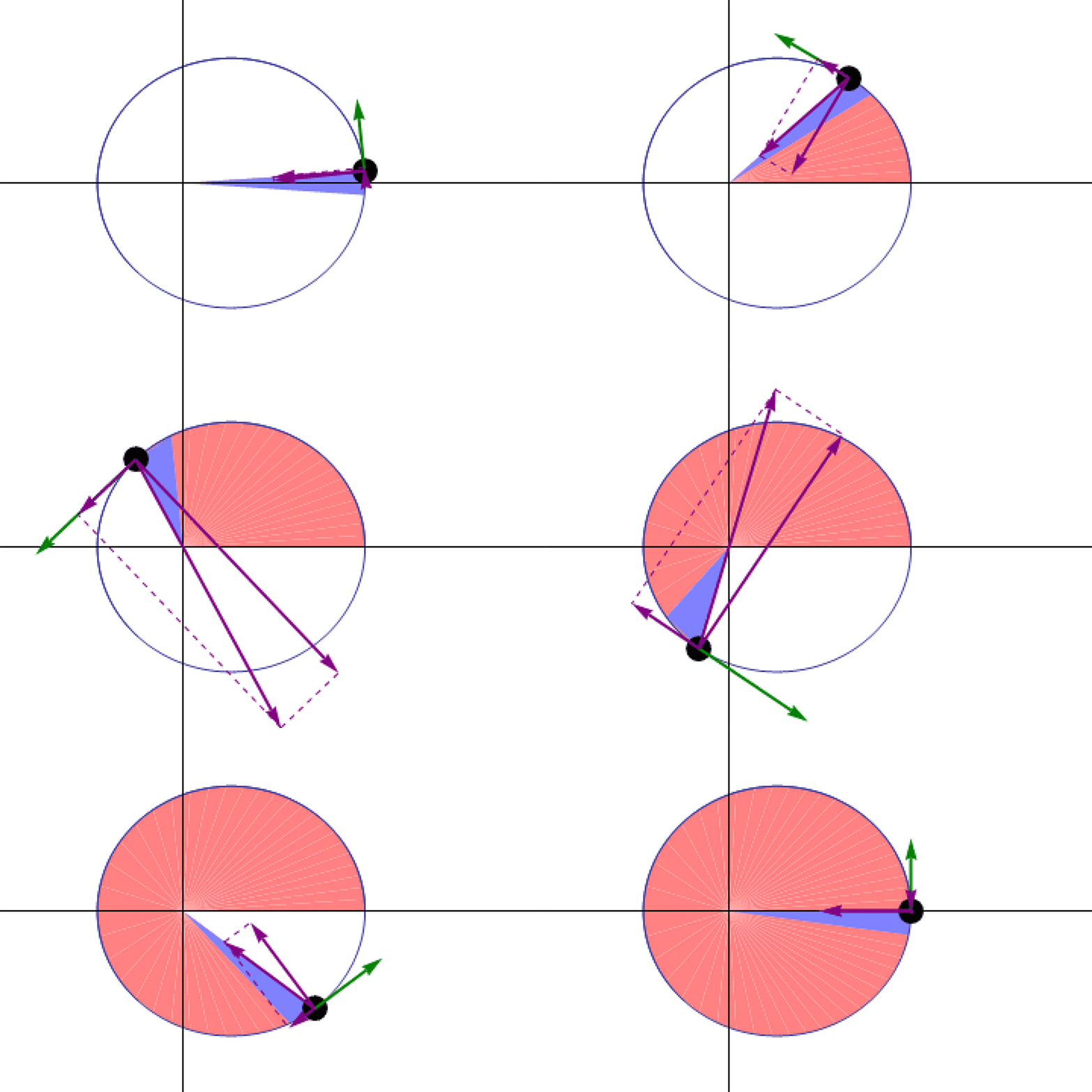
Before we understood how the law of gravity worked, we were able to establish that any object in orbit around another obeyed Kepler’s second law: it traced out equal areas in equal amounts of time, indicating that it must move more slowly when it’s farther away and more quickly when it’s closer. For extremely elliptical orbits, such as comets, the velocity near perihelion is enormous, while the velocity near aphelion is relatively tiny.
Before we understood how the law of gravity worked, we were able to establish that any object in orbit around another obeyed Kepler’s second law: it traced out equal areas in equal amounts of time, indicating that it must move more slowly when it’s farther away and more quickly when it’s closer. For extremely elliptical orbits, such as comets, the velocity near perihelion is enormous, while the velocity near aphelion is relatively tiny.