Southwards through the Heartland

Sunrise at Sioux Falls, South Dakota

After leaving North Dakota, we spent six days traveling leisurely southward through the region west of the Mississippi. We drove around 200 miles per day on average and drove the back roads as much as possible to get a better feel for the state and area

South Dakota

South Dakota – Puppy Dogs Beware!

We stayed that evening in Sioux Falls. We heard the falls looked like tiny Niagra Falls, so we had to take a look. The park at the falls provided a most excellent sunrise walk!

Big Sioux River in Sioux Falls

The Big Sioux River was above flood stage. I saw other places further south where the rivers had swollen their banks.

Flooding in South Dakota

Nebraska

Nebraska Makes Fifty

When I worked for Hewlett-Packard, my first job involved supporting marketing and sales activities in the Midwest. We had just introduced Tsunami, a 2-channel digital signal analyzer that proved to be a big hit for mechanical testing. I spent several weeks visiting many of the sales offices in the region. I made it to all the states except one: Nebraska. I did land at the airport in Omaha and change planes, but I always remember I never actually made it there.
Nebraska Makes Fifty

I must say I liked the little I saw driving through the Winnebago Indian Reservation there. It seemed like it had a nice vibe.

Swedish Church in Oakland, Nebraska. It was interesting how the different European cultures persisted after settlement in the last half of the 1800s, another consequence of the inheritance laws in Europe at the time.

I stayed too far away to see Omaha and the next night outside Kansas City. They were both quite a bit bigger, which made for an interesting and sometimes frustrating excursion.


Missouri

Missouri

Northern Missouri had some nice areas, like Lake Winnebago. This name appeared at various points so far in the slide south. It is associated with the Ho-Chunk people who were forcibly resettled in many of the states along our route.

Missouri Crop Fields

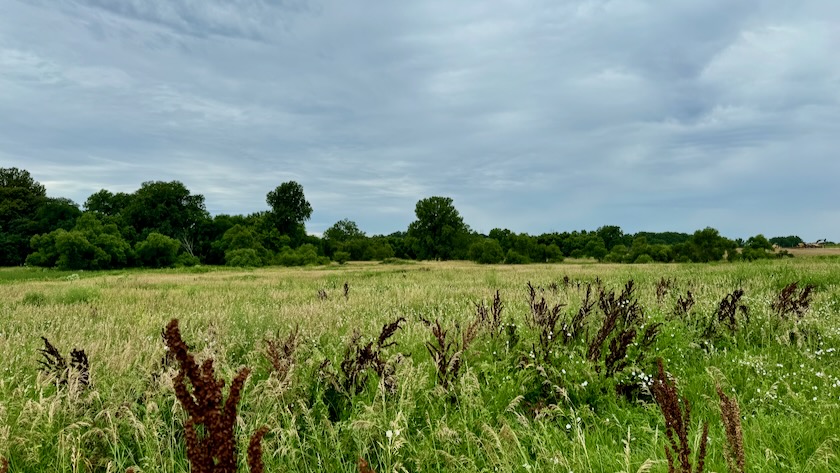
The northern part of Missouri resembled the rolling hills and crop fields of Nebraska. As I moved further south, it became less developed, at least along the route I chose.

Lake Winnebago Missouri

As we drove further south, the landscape changed to resemble the South. Many churches and the Ten Commandments started appearing on billboards. It was not a great vibe compared to the earlier part of the trip. We were now in the Ozarks.


The Ozarks

The Ozarks in Missouri

The Ozarks have always had an interesting connotation to me. My Mom had religious survivalist friends who lived here and took her money for bullshit supplements. It seemed to be a hotbed of addiction when meth became popular. It’s sort of a white trash state in my mind.

Despite my astounding prejudice, I found a certain beauty here. It’s pretty much the same as any place in the rural south. It’s sort of an ‘unchanged by time’ vibe.

Fort Smith, Arkansas, was a strategic fort on the Missouri River in the 1800s. It played a big role in suppressing the Indian uprising and the infamous ‘Trail of Tears’ relocation of the indigenous people to Oklahoma. Most of the structure you see here was a prison.

The final drive into Hot Springs was quite nice. We climbed to around 1500 feet and saw some great visits. As we got closer to the Ozark lakes, more vacation rentals and boats started appearing. We were headed for one of the playgrounds of this part of the country.


Gateway to the West

St Louis – Gateway to the West

A statue of Seaman, the Newfoundland dog, accompanied Lewis and Clark on their famous expedition, which started in Saint Louis.


Saint Louis played a pivotal role in forming the new United States. Originally founded by the French, it traded back and forth with Spain before becoming part of the United States with the Louisiana Purchase. From there, it evolved into a nexus for expansion to the West. Best known, perhaps, was the expedition of Lewis and Clark, commissioned by Thomas Jefferson following the purchase.

Sunrise at Gateway Arch National Park

Sunrise at Gateway Arch National Park

We woke and left early to catch the sunrise at Gateway Arch. I had toured the Arch itself many years ago while on a business trip. I remember it being quite an experience, and I had no desire to do it again.

Gateway Arch in front of downtown St Louis

When we are in a new area, I always try to find a park where Jake and I can catch the sunrise. We made it downtown and came to the stark realization that there was no giant parking lot like every other National Park! However, there are nice hotels beside it with expensive hourly parking. I paid more for a one-hour ticket than the trip to the Botanical Garden later in the morning.

Jake on the stairs of the Gateway Arch

It was all worth it when we got thereβ€”all by ourselves, more or less. We walked around the Arch. It truly is a magnificent sight and engineering achievement. I am frankly amazed it looks so goodβ€”a testimony to its designer.

Lewis, Clark & Seaman the dog – perhaps the most famous of all American explorers

We were happy to find a beautiful bronze statue of Lewis, Clark, and their faithful dog, Seaman, on the waterfront. A Newfoundland dog, he survived the trip and was renowned for the service he provided the two Captains on their journey in the early 1800s.

The US Courthouse
Sunrise on the Mississippi River

Missouri Botanical Gardens

Missouri Botanical Garden – Water plants with Climatron for tropical plants in the background.

Kari went to Medical School in St Louis. She recommended the Botanical Gardens. With Jake safely back at the trailer, I ventured into St Louis for a visit.

Missouri Botanical Garden

The museum dates back to 1859 and has a collection of preserved plants (a herbarium) with over 6.6 million specimens. It occupies 79 acres in an area southwest of the Gateway Arch.

Missouri Botanical Gardens – Rose Garden

I was impressed by the very well-kept gardens, meticulously labeled and tended to by a seeming army of volunteers and workers. In fact, there were more of them early in the morning than actual visitors! Like the earlier visit, I felt like I had the place to myself.

Missouri Botanical Garden – Japanese Gardens

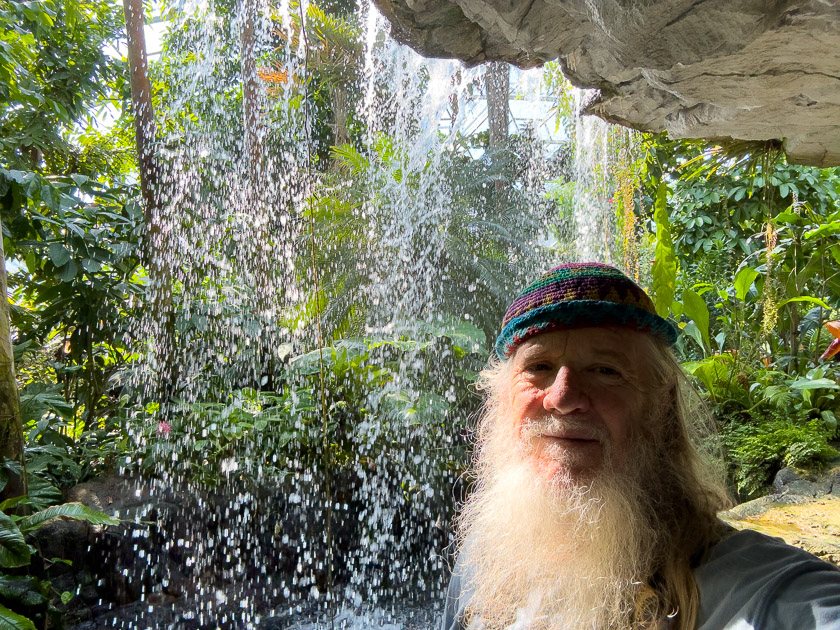
The Japanese gardens were very large, occupying over 25 acres. The Climatarium held a vast collection of tropical plants in an amazing setting. The flowers were full in bloom and beautiful.

Missouri Botanical Garden – Climatron Tropical Plants

It was a bit overwhelming! I spent a few hours walking the gardens, but you could easily spend a day here. It was a great visit!


We will spend the next few days heading northwards to reach La Crosse, where we will spend a few days with Theo & family!

Mississippi River