Southbound Experiences

Amish farm in Lancaster County, Pennsylvania. They basically live in fear of God and work to suppress their Free Will. Not so sure if the Dude would abide, but hey, there’s always bowling!


After reaching the peak of our trip, we embarked on a southward journey. Our route took us back through southern Massachusetts and into the Hudson River Valley. Along the way, we made two stops before reaching our ultimate destination: Lancaster County in Pennsylvania. Lancaster County is renowned for its Pennsylvania Dutch heritage, particularly the Mennonites and Amish communities.

Sturbridge, Massachusetts

Sturbridge Massachusetts

The first night’s stop was in an upscale private resort near Sturbridge. There is a recreation of an 1830s village in Sturbridge that looked interesting. The area itself is heavily wooden part of southern Massachusetts near the border with Connecticut.

Canadian Goose Shit Beach: Honestly, these feathered rats that shit like dogs are a nuisance. I mean, live and let liveβ€” right? I vote we deport these nasty beasts!

The campground was first class with many indoor pavilions. It was set on a lake, and the beachfront was full of Canadian goose poop.

πŸ’©

There were dozens of bright, sparkling, prefabricated cabinsβ€” nothing rural here. I didn’t see a single one of them occupied. It gave the place a very eerie feel. However, there was a ring of high-dollar class A motorhomes occupying the front camping area. Starship Excellent Adventure fit right in!

The next part of the journey took us through well-known names like the Berkshires and the Catskills. As we made a sharp southerly turn, crossing the Hudson River, I vowed to actually see the river at our next stop! We passed Woodstock along the way. I asked a local about what was happening there, and she suggested a visit. A missed opportunity.

Plattekill & Poughkeepsie ~ New York

The campground was located in Plattekill near Poughkeepsie. I learned Poughkeepsie is called the “Queen City of the Hudson.” Not sure about that but boy was it a confusing place to drive through! I also learned the city gets its name from a word in the Wappinger tribe’s Munsee language, meaning ‘the reed-covered lodge by the little-water place’, referring to a spring or stream feeding into the Hudson Riversouth of the downtown area. Wikipedia

We set up camp in a nice campground, set up as a destination for the with-children set. Regardless, it was mostly people like me at this point. A local told me summer really doesn’t arrive here until mid-June, and the schools get out.

Plattekill New York

We set up camp and headed to Poughkeepsie. The roads are very curvy here and in pretty good shape. That, plus an aggressive driving style of fellow road warriors, made for a fun trip! We crossed the bridge and headed for the river.

Mid Hudson River Bridge to Pouchkeepsie New York

The bridge dumps you out into a complex traffic scheme full of u-turns and other funnery! We made it safely to the spot called Quiet Cove Riverside Park. We learned from a local hanging out there that it used to be a New York State (Mental) Hospital!

Hudson River at Poughkeepsie

In the series above, both the Pedestrian only bridge and Hudson River Bridge (two large towers) we crossed are shown separately. It was tempting to walk the Pedestrian bridge, but my back disagreed! I doubt Jake would have liked it much either.

We had another thrilling dash back to the campground after confirming that, indeed, the Hudson River met the specifications of a magnificent river!

Pennsylvania Dutch Country

The next day’s drive was a mix of beautiful scenery, heavy industrial traffic (e.g. trucks everywhere), and some seriously fucked-up roadways. After at least one missed turn, we finally made it to our campground about 10 miles east of Lancaster, Pennsylvania. The campground was on the side of a hill and has a stunning view of the farmland below.

We arrived at the campground and noticed our first clue that we had left Kansas behind. Unlike most campgrounds I’ve stayed at, this one was clearly designed for older travelers. There were no kid-friendly activities at all. The campground boasted gorgeous green lawns and immaculate gravel. The next thing that became apparent was the subtle wealth. Several million dollars worth of high-end, Class A motorhomes, most of which were towing luxurious cars, lined the campground. Some of the nicest motorhomes I’ve ever seen were there.

So this was obviously a draw for those that enjoy what this place has to offer. A combination of stunning country scenery, food and nostalgia.

The Shopping Experience

Shopping in Pennsylvania in a huge grocery store. Really big!

I need to resupply, so I found a well rated supermarket about 10 minutes away. I was not quite prepared for what I found. First I drove past a Smorgasbord restaurant that was as big as a Costco. That led to one serious unit of a grocery store. I mean this store was one of the biggest I had ever seen. Everything looked amazing. I bought way more than I should have!

The Pennsylvania Dutch Experience

I left Jake again and headed towards Lancaster. My destination is the Landis Valley Village & Farm Museum. The museum is number of buildings hosting different aspects about early life in this area. It was started by the Landis Brothers in the early 1900s to capture what life was in the grandparents days.

I walked the grounds and spent considerable time in the three buildings that had knowledgeable staff about life on the road for men traveling the area and the art of textile and tin metal work.

This area was originally settled after the 30 year war (a nasty-ass religious war) by German speaking people of the Palatinate region of Germany. The first wave of immigrants from this area were the Amish and Mennonites. They were fleeing from religious persecution for their different beliefs. The countryside very much reminds me of that part of Germany when I traveled there in the 1980s.

The second, and much larger, wave of immigration came next. These were primarily Lutherans and other Protestant religions (no Catholics please). Regardless, they all brought a very German-like work ethic as well as traditional Arts & Crafts. To me this is reflected today in the care I saw all around for the land and the homes and buildings on the land. Very cool.

As I drove around I was continually impressed by the scenery. The place really is like a living postcard!

Pennsylvania Dutch Fare Dude Style – Traditional Sausage, German Potato Salad and Whole Milk!

I topped the day off with a most excellent meal made from my earlier shopping extravaganza! Next stop in Harper’s Ferry West Virginia for the Civil War Experience!

Amish Buggy in Intercourse, PA 😳 Here’s the rub – they changed the name from Cross Key. Who knows why? The buggies are very cool, small, and go fast. The horses are magnificent looking! No glue-factory-bound nags here!


Mystic Pizza

When I planned the trip I learned about Mystic. Such a cool name! I quickly lesrned two things: (1) There was a Seaport Museum with old ships you could tour and (2) There was a movie called Mystic Pizza that was somehow associated with the town. So I decided to stay for a day.

We headed north out of Dover and made our way northwestwards. The idea was to bypass The New York city area to the west and make our way back to the coast from there.

Pennsylvania Welcome

We left Delaware and entered Pennsylvania, driving towards the Pocono Mountains near the border with New Jersey. Years ago, I had heard about this area from my colleagues who worked in the New Jersey area near New York. It was a popular destination for skiing and mountain activities. Although I had driven through this region, I only remembered it was in the mountains.

Delaware Gap National Recreation Area

We stayed the night at a very nice campground near the Delaware Gap National Recreation Area. We enjoyed our walks and the local wildlife!

The next day’s drive went through the Recreation Area. Very scenic!

Somewhere in New York. Disgustingly dirty roadside stops.
East Fishkill 🫨 Why would you even fucking name a place this?

(Turns out kill means a riverbed or a body of water in Dutch. They settled this area and used this to name a lot of the places they came across.)

We ended up crossing into Connecticut as we dropped out of the mountians.

Welcome to Connecticut

We drove almost the entire length of the state before reaching the campground near Mystic. While the location was pleasant, its proximity to the Interstate caused excessive road noise. To make matters worse, there was road construction on the Interstate. On our first night, we were awakened by an hour of a massive engine doing something somewhere so loudly that the trailer shell resonated!

Mystic

The next day Jake took the morning off as I visited Mystic. I promised him we would go back later and do some walks!

Downtown Mystic – Shopping galore!

The name “Mystic” is derived from the Pequot term “missi-tuk” describing a large river whose waters are driven into waves by tides or wind. Mystic was a significant Connecticut seaport with more than 600 ships built over 135 years starting in 1784. The village is located on the Mystic River which flows into Fishers Island Sound. The Mystic River Bascule Bridge crosses the river in the center of the village. It is very much a tourist town, especially with the Mystic Seaport Museum.

Raised bridge on the main road through Mystic. The concrete is a counterweight for the bridge roadway, requiring a lot less energy to open and close. Usually, the counterweight is located below the bridge surface. My guess is the small size dictated they be on top in this configuration.

Mystic Seaport Museum

The museum is the largest in the United States. The site holds a collection of ships and boats and a re-creation of a 19th-century seaport village consisting of more than 60 historic buildings, including many rare commercial structures that were moved to the site and meticulously restored.

I spent a couple of hours touring the site. Some of the highlights included the Whaling Ship Charles W. Morgan, a shop filled with old clocks and sextants, and exhibits on whaling and its impact. Knowledgeable staff were in abundance and eager to answer questions.

Charles W. Morgan is a whaling ship which was active for 80 years. She is the only surviving wooden whaler from 2,700 ships that operated in the United States whaling fleet. On her deck are huge try pots used to render blubber into whale oil. She came to Mystic Seaport in 1941 and was designated a National Historic Landmark in 1966. Wikipedia
Clocks and Sextants: The site featured numerous exhibits related to navigation. This room housed a collection of clocks and sextants used by mariners during the 18th and 19th centuries.
Timekeeping on a ship was an arduous task. Constructing a clock that would maintain accuracy and withstand the harsh environmental conditions of the sea proved extremely challenging. This was a ships clock crafted by a clockmaker in Mystic around 1800. I was astounded by the intricate construction, featuring both wooden and metal gears.
This was an awe-inspiring piece of artwork. I sensed that it depicted real-life hardships during the era of whaling. I was astounded by the intricate details of the line drawing.
Detail of the drawing. I would think the white Christian nationalists would deem this about as woke as it gets! In your face, Cheeto Satan worshippers!

I thoroughly enjoyed my visit here. It was an excellent representation of the seafaring life of the coastal inhabitants of the New England area.


A Slice of Heaven

It was then lunch time! Time for a Mystic Pizza!

A Slice of Heaven

Mystic Pizza opened in 1973. A screenwriter was vacationing in the area and was captivated by what she experienced. In 1988, a movie about the lives of three waitresses working there was released. It was well reviewed and the restaurant became a sensation, with people crowding to get A Slice Of Heaven! It’s run by the grandchildren of the original owners.

And the pizza was delicious! Crispy with the cheese on top of the fillings. Yummy!

Mystic Pizza: mementos from the movie and other Hollywood glitz!

Coastal Scenes

I drove back and picked up Jake to explore some of the coastal areas. We enjoyed beautiful views from nearby Stonington and the harbor near Mystic. I briefly spoke with a guy who was about to go scuba diving in the 50-degree water! Turns out, he’s an ex-Navy diver trained in Panama City and is currently working on submarines in nearly New London. How incredible is that? And he was cleaning the bottom of a boat! 🀣 They always told me Navy Divers were a breed-apart!

Latimer Reef Lighthouse off of Stonington Harbor

There are many well-maintained cemeteries in the area. It was quite unlike anything I had seen before. Some of the monuments were exceptionally detailed and remarkably well-preserved. They served as a testament to the wealth and prosperity that the region experienced during its early days in America. They were a testament to Moral Materialism at its peak.


Thankfully, the second night it started to rain. We were spared the roadwork at 0-dark-thirty and got a good night’s sleep. Next stop: Cape Cod!


Connellsville

It was a very scenic drive leaving the State College area and heading for Connellsville just south of Pittsburg. Beautiful green, rolling hills with a touch of early Fall color.

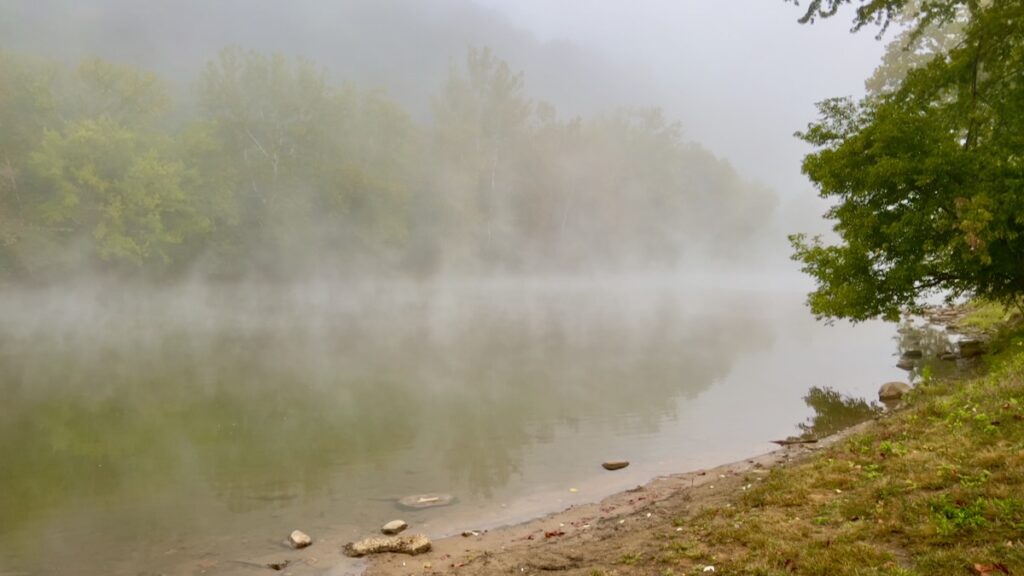
We stayed at another large KOA getting ready to celebrate Halloween this weekend. It is on the Youghiogheny river in a hollow. A very scenic setting. The weather was cold but fair while we were there.

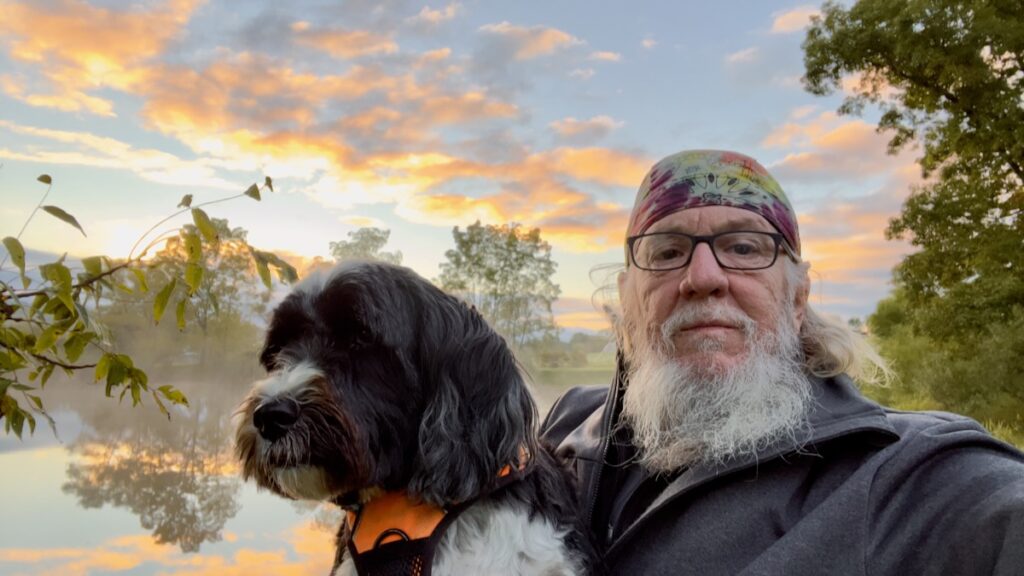
Morning mist on Youghiogheny river

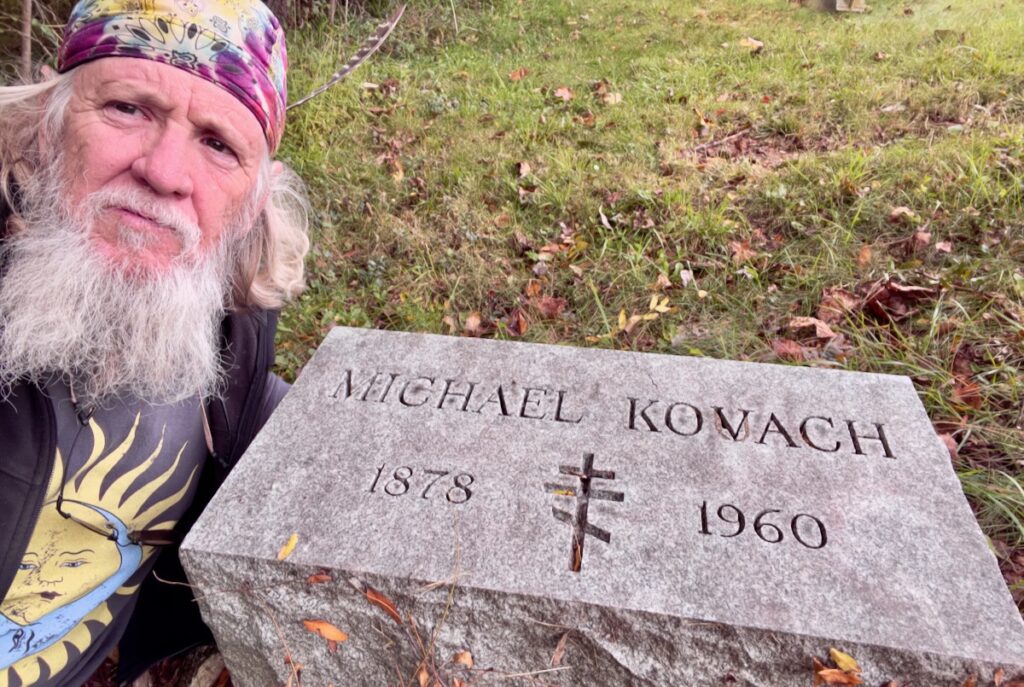
My Mom’s family, Mary & Michael Kovach, immigrated here in the early 1910s from Checklosovakia. My nephew Adam told me he thought they could be Rusyn Americans. According to a person I met, a lot of Slovakian immigrants came to this area as miners.

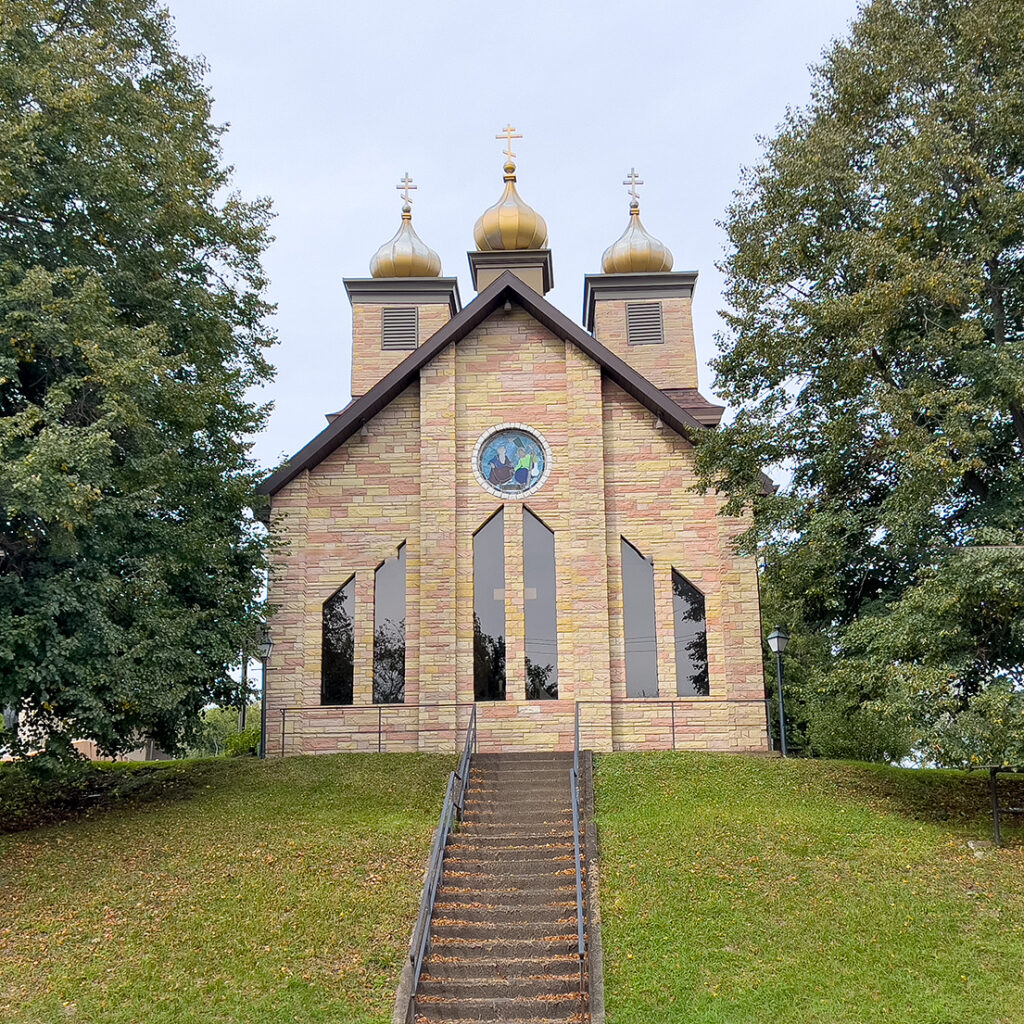
The immigrants were of an Eastern Orthodox religious background. A Byzantine Church was built in the late 1880s about 5 miles outside of Connellsville in Dunbar township. This is where the 1930 census has my mother living with her older brothers and sisters. The groundskeeper at the church told me it was the first Catholic church built out of stone in the United States. It was striking (and a bit out of place) with the onion dome towers.

St Stephen Byzantine Church in Dunbar Township Pennsylvania

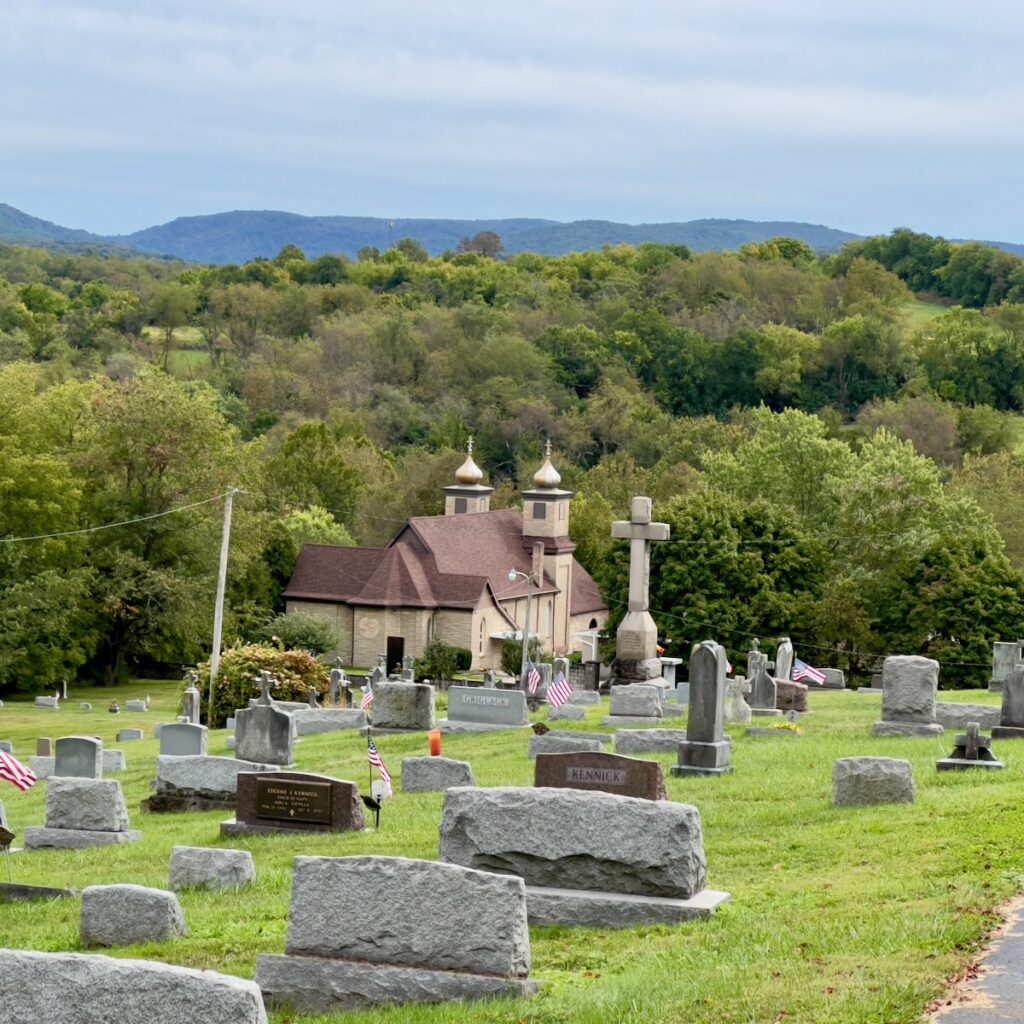
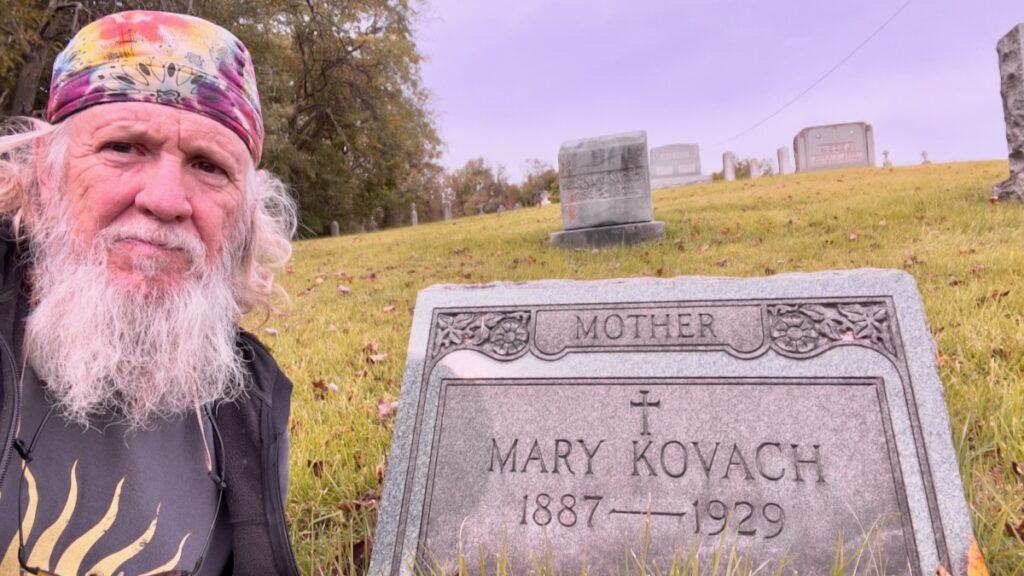
Behind the church was a larger, well-tended cemetery with the graves of her mother, father, and several of her older brothers and sisters.

St Stephen Byzantine Church Cemetary

Mom came from a large family with 10 brothers and sisters. Her mother passed from complications of the birth of the last child, George. The father, for whatever reason, did not participate in their upbringing. This left the older children to take care of the younger ones. Most of the younger children were girls and married, and left the area like my Mom.

My grandfather Michael. He died at 82 in a car accident. My mother only met him once (after she was older) that I know about.
My grandmother Mary. She died following the birth of the youngest child. My mother was not even 2 years old.
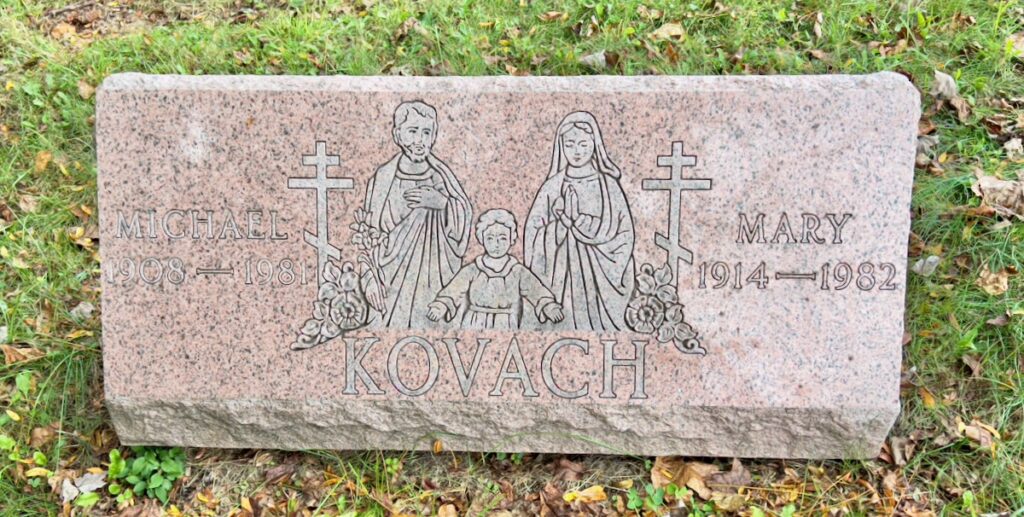
Oldest brother Michael and his wife. He was born in Czechoslovakia and stayed behind for several years before moving to the United States. Mom told me he didn’t like it here but stayed anyway.
He had a large family. One of his daughters visited an area in the Ukraine where she thought they came from but was unable to find anything. It remains a bit of a controversy as to their actual origin but all of my geological research points to Checklosovkia.
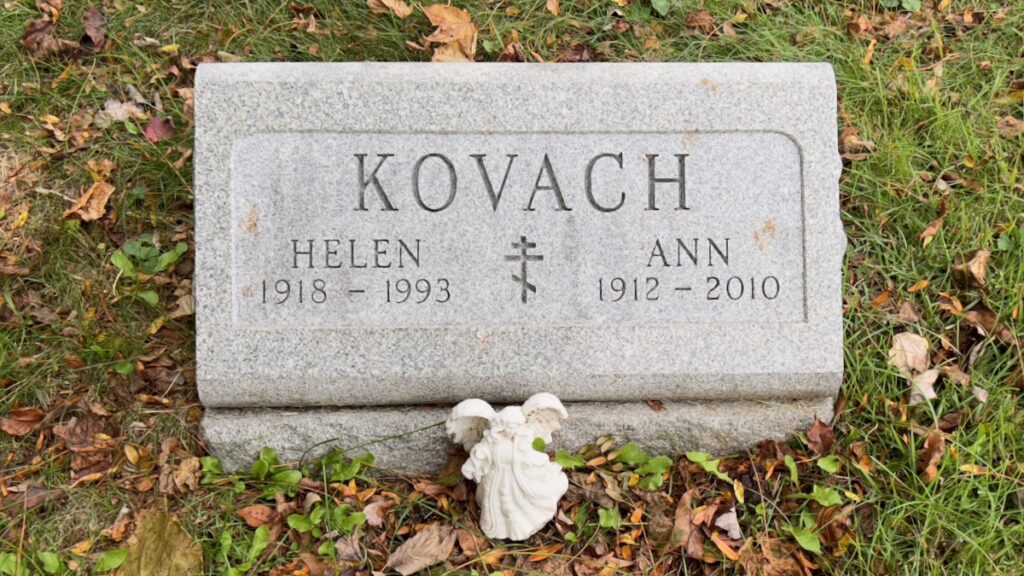
Oldest Sisters Ann and Helen. They never married and raised their younger brothers and sisters along with the eldest son Michael. Ann worked at the church for her whole life.
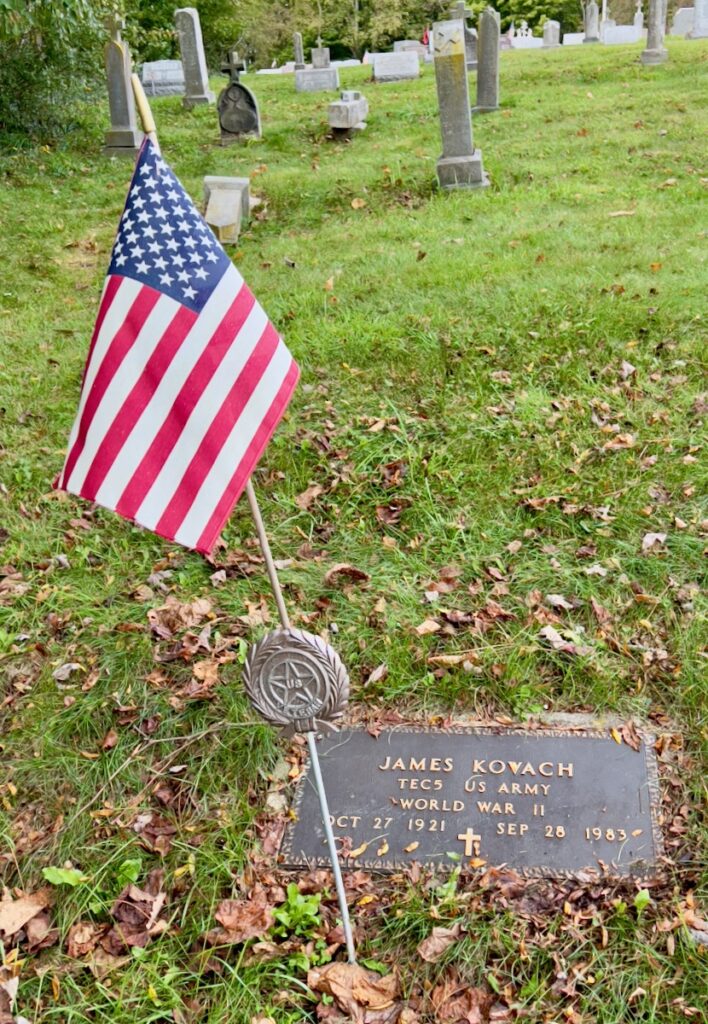
Older brother James. He never married and I believe worked for the railroad.

Like in Snow Shoe, I tried to make a connection with these ancestors while there. Wondering what their lives were like in this beautiful mountain area.


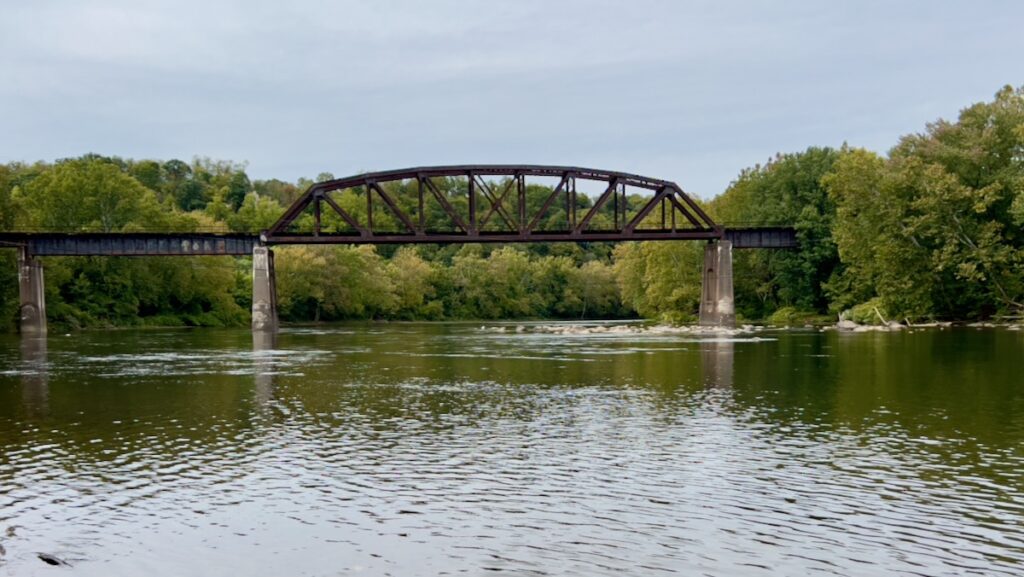
Connellsville itself was a large town – almost a small city – with a lot of traffic. It sits right on the river which makes for some scenic views. I visited the waterfront and learned the Great Allegheny Passage, a 150-mile hiking and biking route, runs through Connellsville.

Youghiogheny river in Connellsville

This ends the ‘roots’ part of the program! Tomorrow we make our way south (through the remnants of Ian πŸ™ƒ) through the Appalachians over three days and a long stop at my friends Bill and Laura Zweigbaum in Tennessee.

Snoe Shoe

It was a quick trip to Bellefonte Pennsylvania for two nights while I started the ‘roots’ part of our adventure. A couple of hundred miles west of New York, this area was opened to commercial logging followed by coal mining in the 1800s.

We stayed at a nice campground that obviously catered to Penn State football fans in the Fall. A lot of unattended large rigs are covered with Penn State hoo-ha. They had a game the coming weekend so a few early birds were there. The facility was very nice, had a nice pond next to some horse pastures. It also had a rather elaborate set of tracks for motocross bike racing.

Pond at Bellefonte KOA
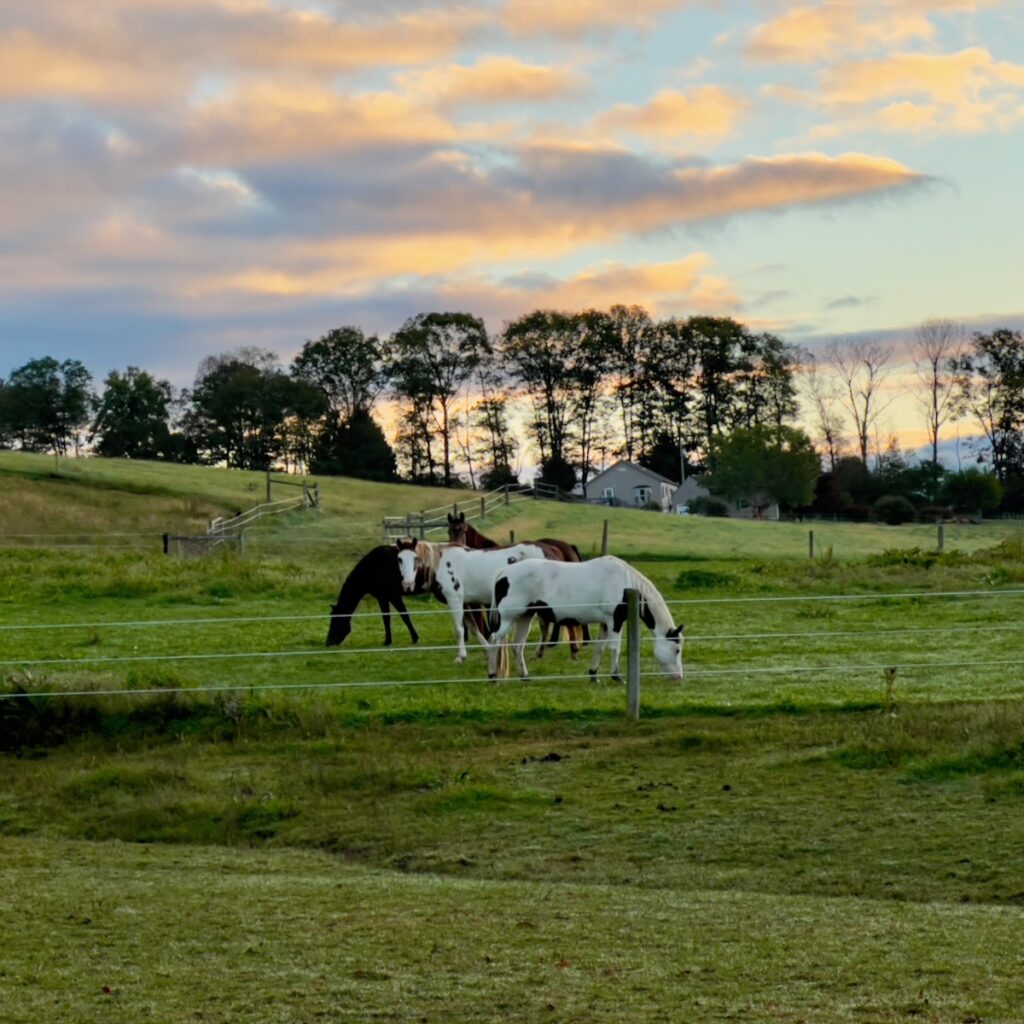
Horse pastures near Bellefonte KOA

My 2 x great grandfather Thomas Tubridy immigrated with his young family to the mountains just north of here in what is now the Burrough of Snoe Shoe. His youngest son, Thomas Anthony, was a successful coal miner and his son Edward Bernard – my grandfather – went to college at Penn State nearby to our RV park. More detail is on my Tubridy page.

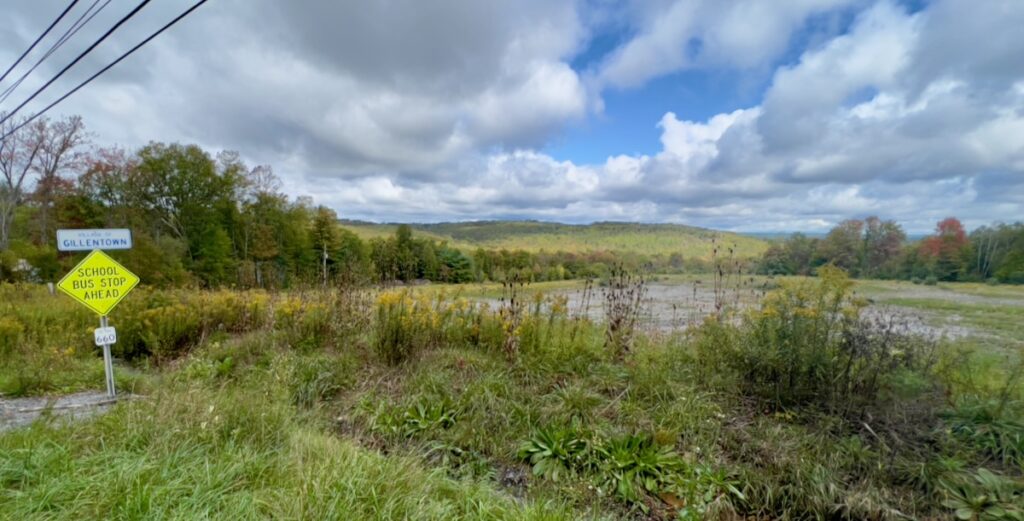
It was a steep climb to the exit right off of Instatestate 80 for Snoe Shoe. I identified three different places in my genealogy research: Snoe Shoe, Moshannon, and the village of Gillentown which lies in between. This is where my grandfather lived with his father and two aunts in the 1900 census.

I imagined my grandfather making his way down to State College where he attended Penn State in the 1910s. Did he ride a horse or have a carriage? How long did it take?

Gillentown was listed as my grandfather’s residence in the 1900 census

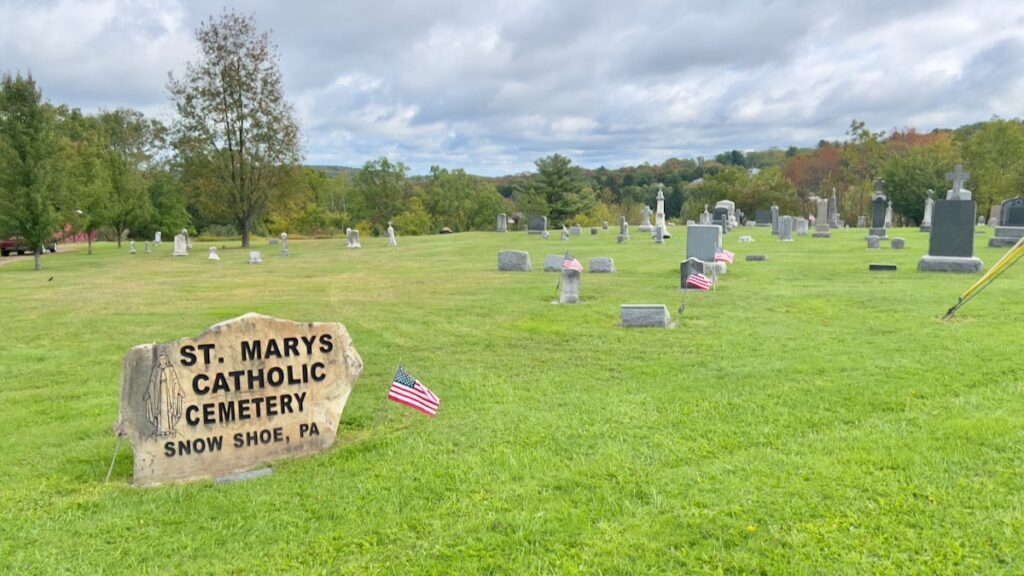
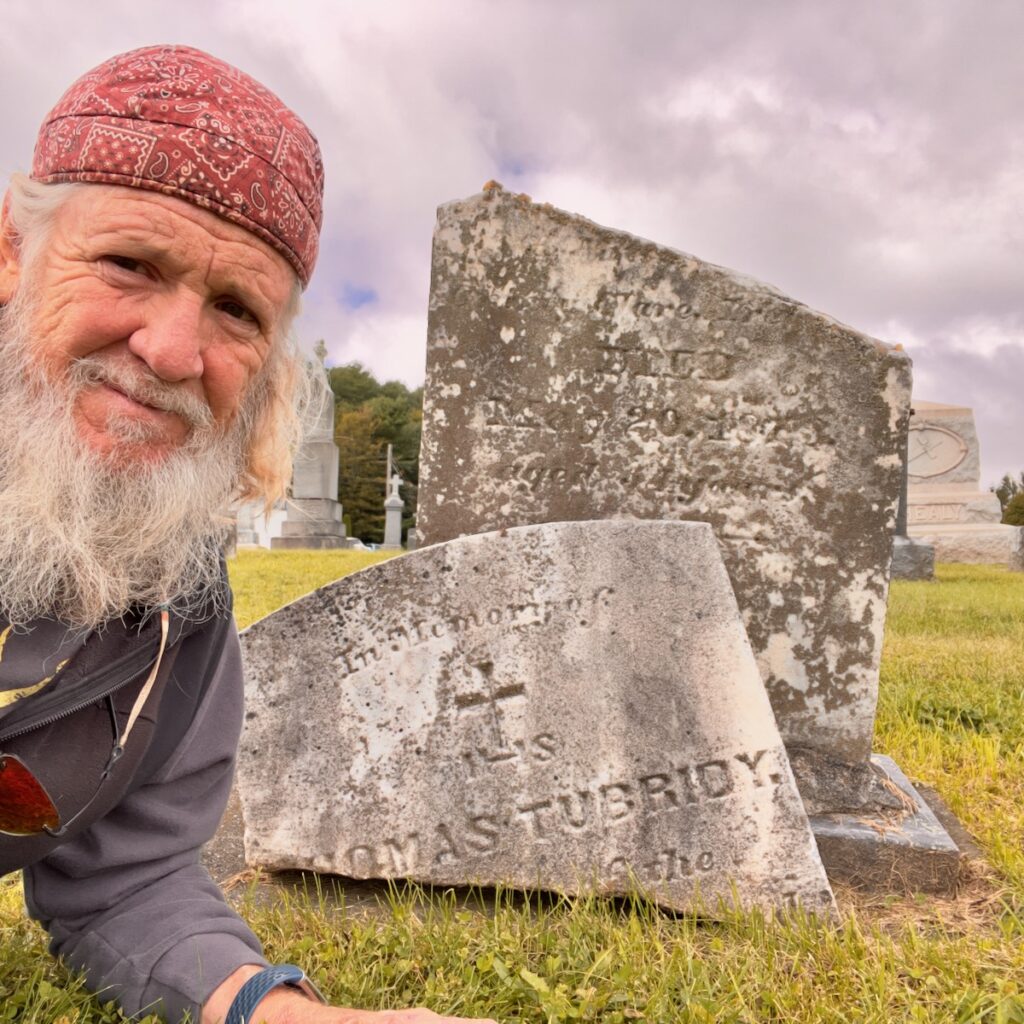
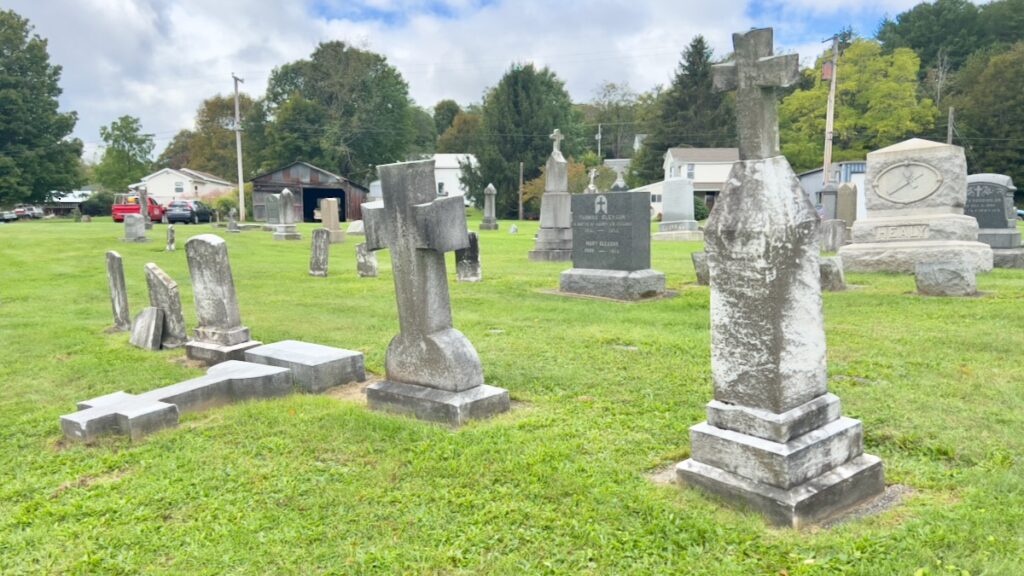
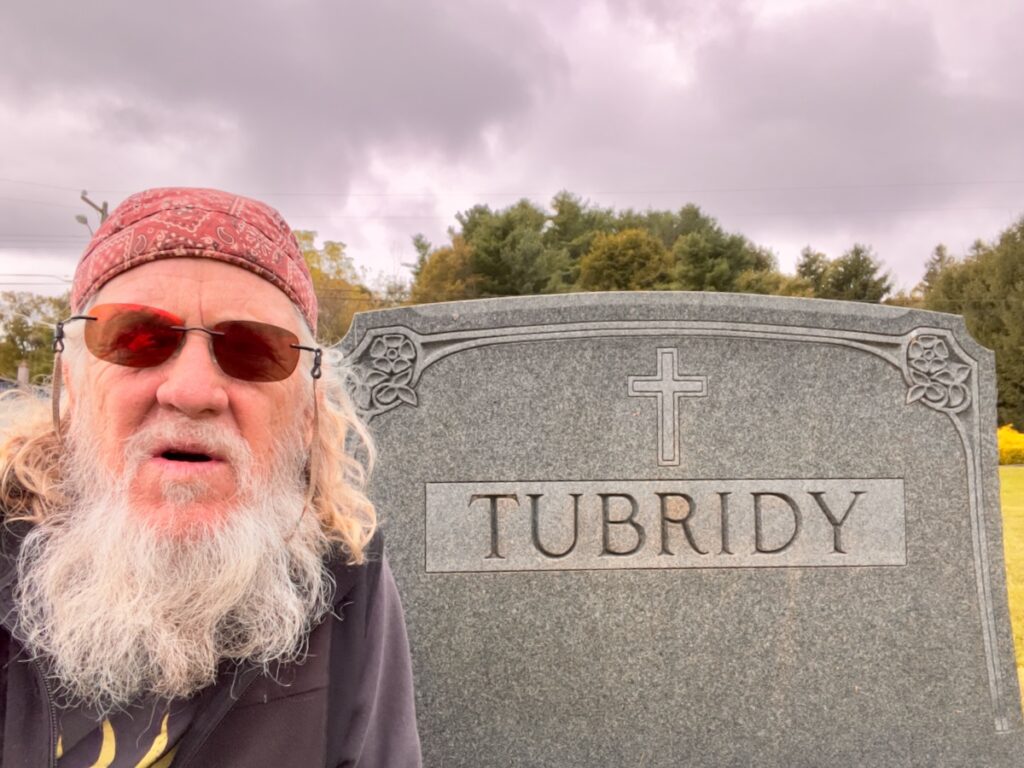
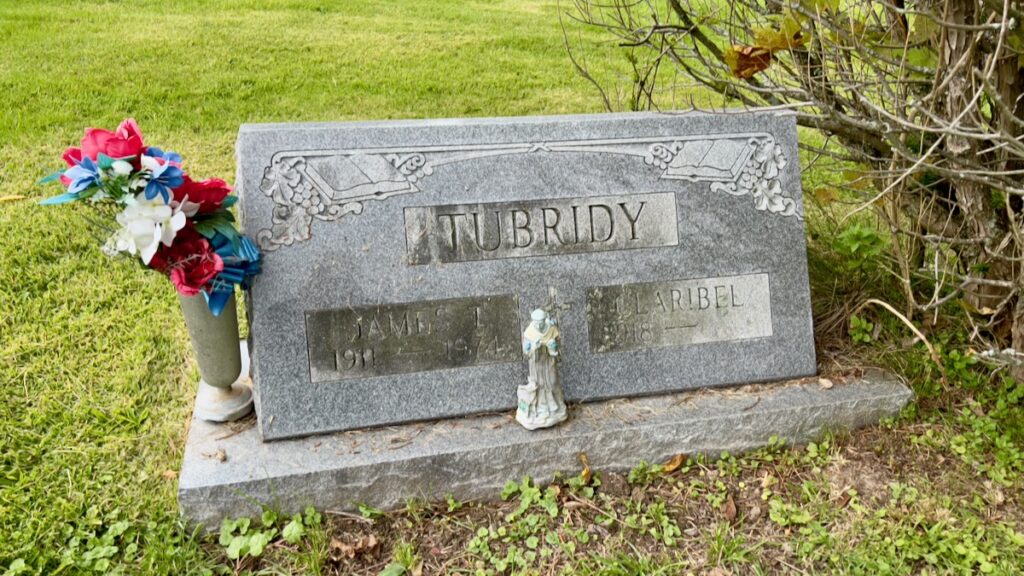
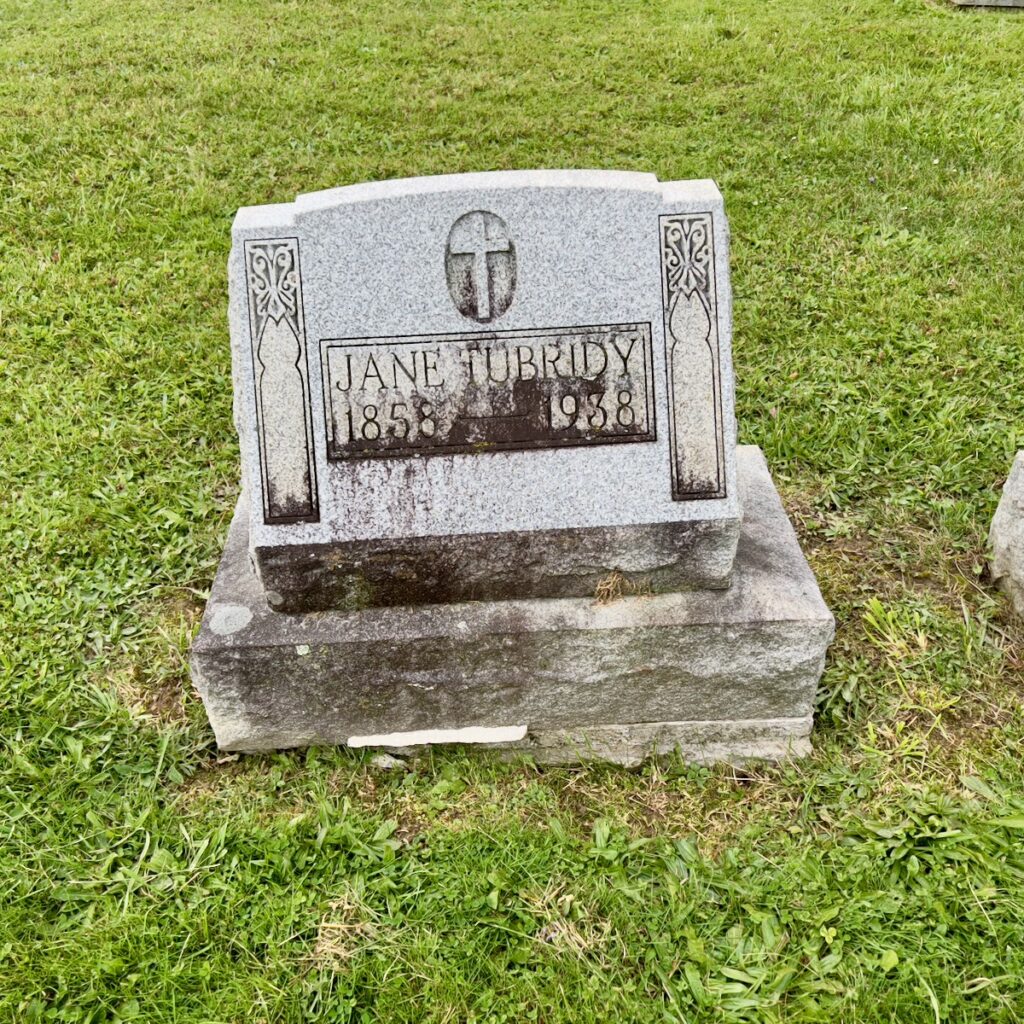
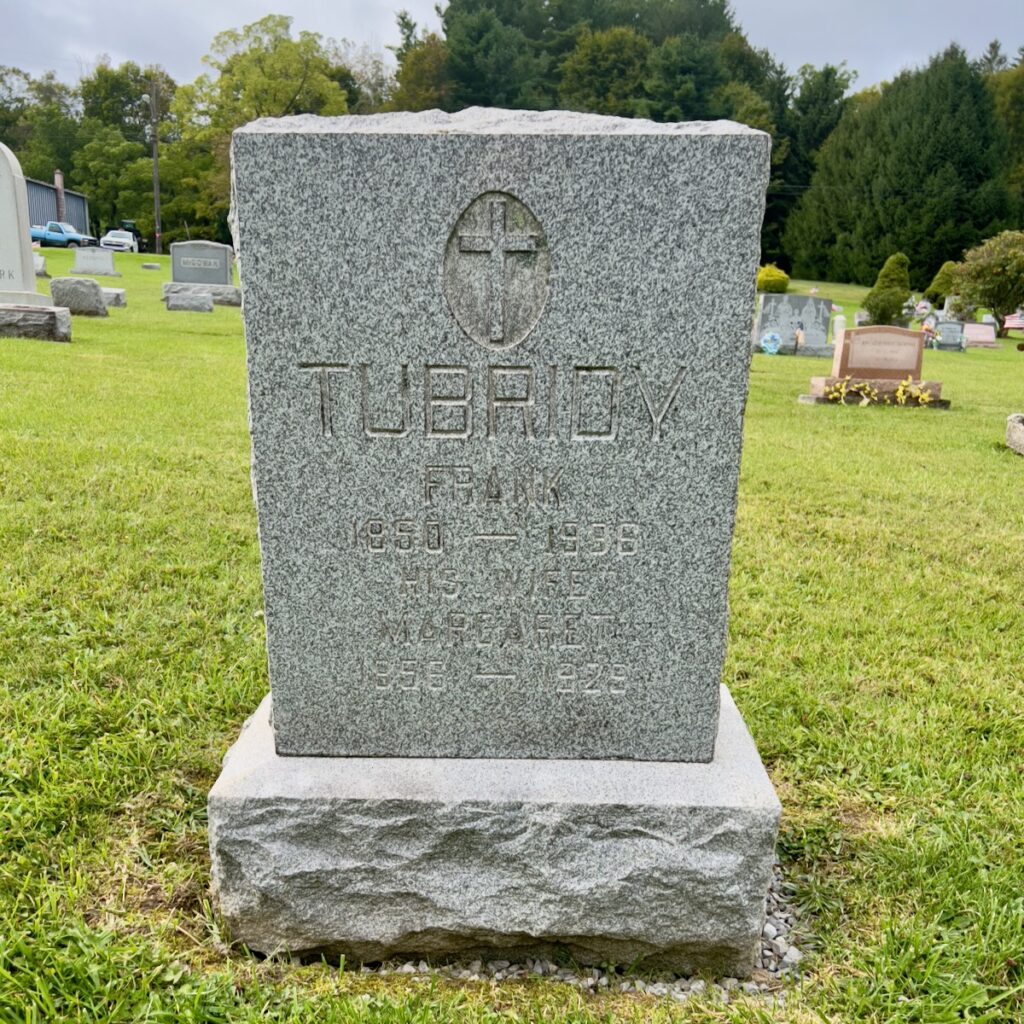
St. Mary’s Catholic Cemetary is located near the Catholic Church in Snow Shoe. Two generations of Tubridys and some of their children are buried here. The first generation headstones were in pretty bad shape but the second generation had held up very well. The cemetery was well kept up.

It was moving to touch the headstones knowing that my ancestors had once touched them too.

Thomas Tubridy – First Generation born in Ireland
First Generation Tubridy Family
2nd Generation Tubridy – Thomas Anthony. Separate markers for himself, his second wife, and his eldest daughter.
Grand Dad’s younger (half) brother James and his wife. This grave seemed to be visited more often – one of my relatives? From my research, he did not have any male descendants.
Sister of Great GrandFather Thomas Anthony. I don’t think she ever married.
Frank (or Francis) was 2 x Great Grandfather Thomas’s eldest son. Frank was born in Ireland right before they immigrated and had many descendants, including the only males other than our family. He was Thomas Anthony’s 12 older brother.

Moshannon is an unincorporated community about 3 miles outside Snoe Shoe to the northwest. Right before you get into Moshannon is the village of Gillentown. There is a large facility here that is part of the Snoe Shoe Rails to Trails Association. This provides access to the old railroad bed that was vital to the extraction of lumber and coal. Membership in the association allowed the use of the trails for ATVs.

I imagined if my ancestors would ride the train into the coal mining areas.

Gillentown Trail Access. This is the old railroad that brought lumber and coal out of the mountains.

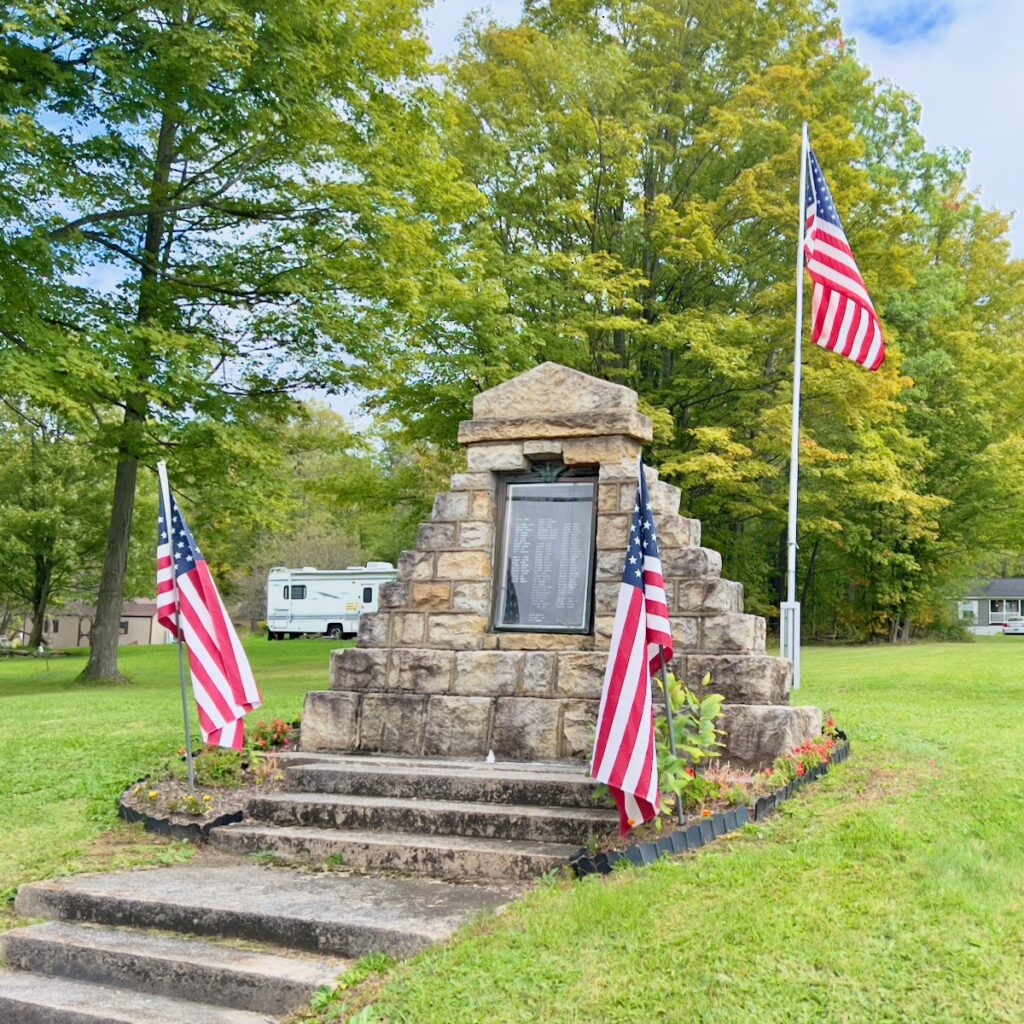
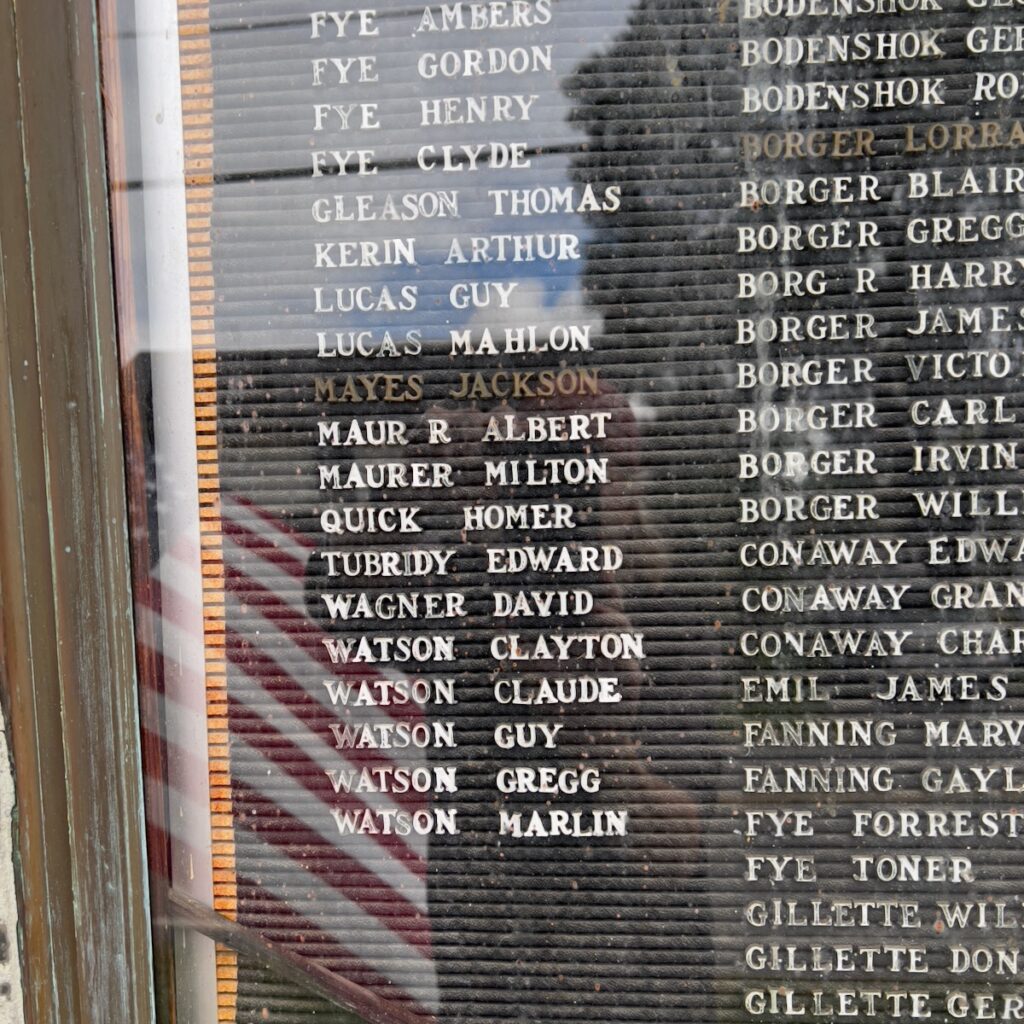
Moshannon has a Post Office and to my surprise a small memorial to the veterans that fought in World War One – including my grandfather Edward. Like the cemetery, the monument was well kept up.

Moshannon WW I Memorial with Grand Dad’s name

I imagined being there when the locals including my family were there to see its dedication.

Moshannon WW I Memorial with Grand Dad’s name

I was planning to visit a museum the Lions David House museum in Snow Shoe, but alas no one showed up at the time it was supposed to be open. It has a collection of memorabilia and books on local history – it would have been interesting to see what was in there.

I spent time driving around. It is rural, to say the least. Mostly nice brick ranch houses like I remember my grandparents had. Felt pretty red πŸ”΄.

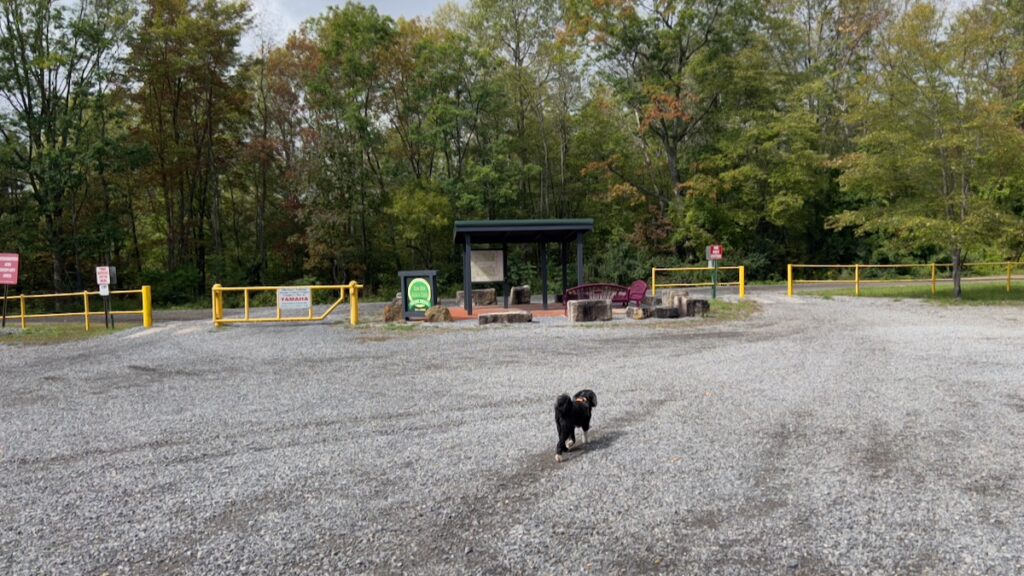
Snow Shoe had a pizzeria, a discount beer store, and a laundromat. There is a nice Catholic Church next to the Cemetary and a Firehouse / Community Center. There was a large veterans memorial next to the Firehouse. There is a very large area with baseball fields and a pool at the edge of town. Right outside of town next to the Interstate is a large FedEx facility.

I felt I had accomplished what I was expecting to create a better connection to my past. Makes sense given the fact that it’s really all we have, and all of that is responsible for me being here, now. Pretty ethereal if you ask me.

Dog is good 🐢

Three Mile Island

As a brash young man, I decided I would put my huge brain to use in solving the world’s energy problem. Of course, I had to do something completely different so I decided to become a nuclear engineer. I went to graduate school in Seattle where the campus not only had a nuclear reactor but it was housed in a glass building for all to see. Seriously, it’s a landmark now.

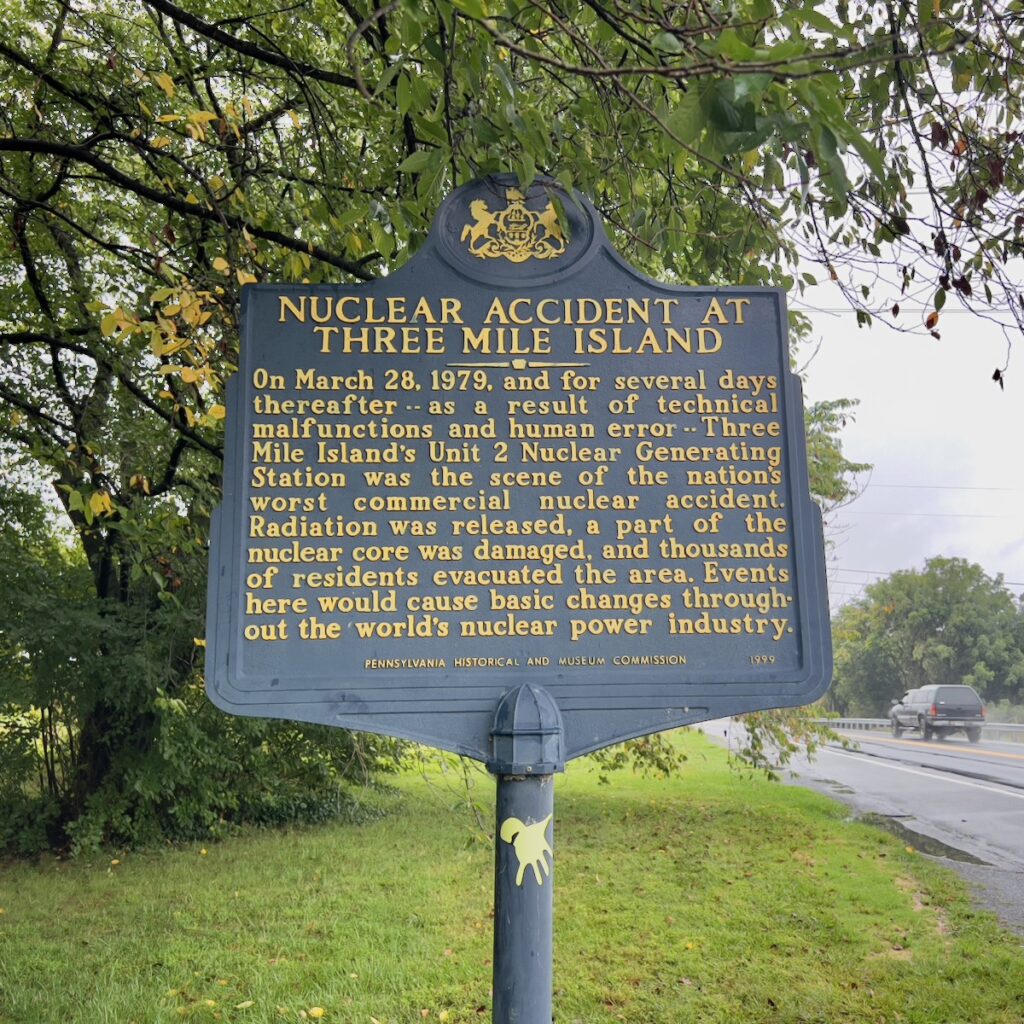
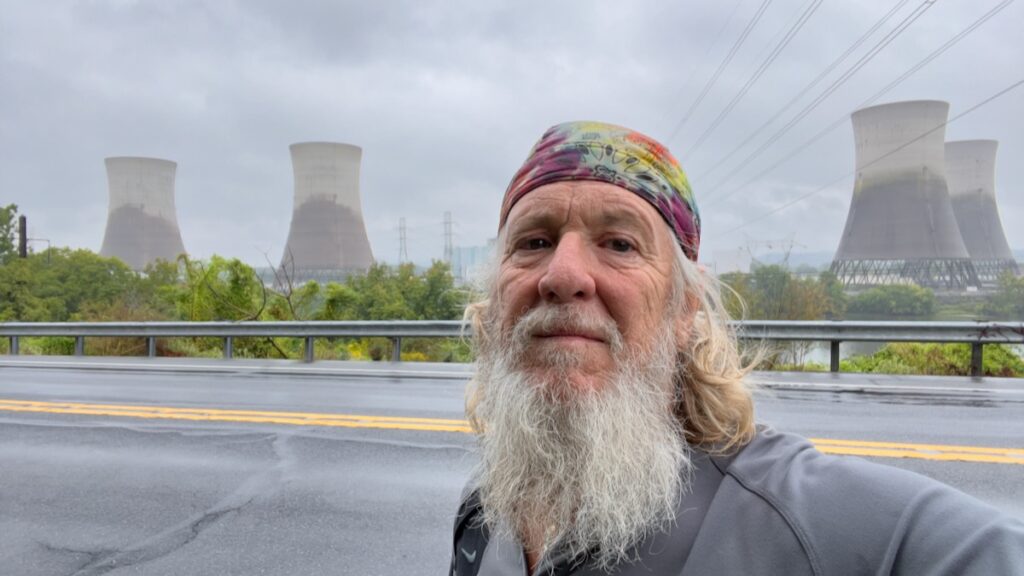
Not a full year into my studies the first large-scale accident at a commercial plant in the United States occurred at Three Mile Island. So much to my surprise when I noticed it along my route and I stopped by for a visit.

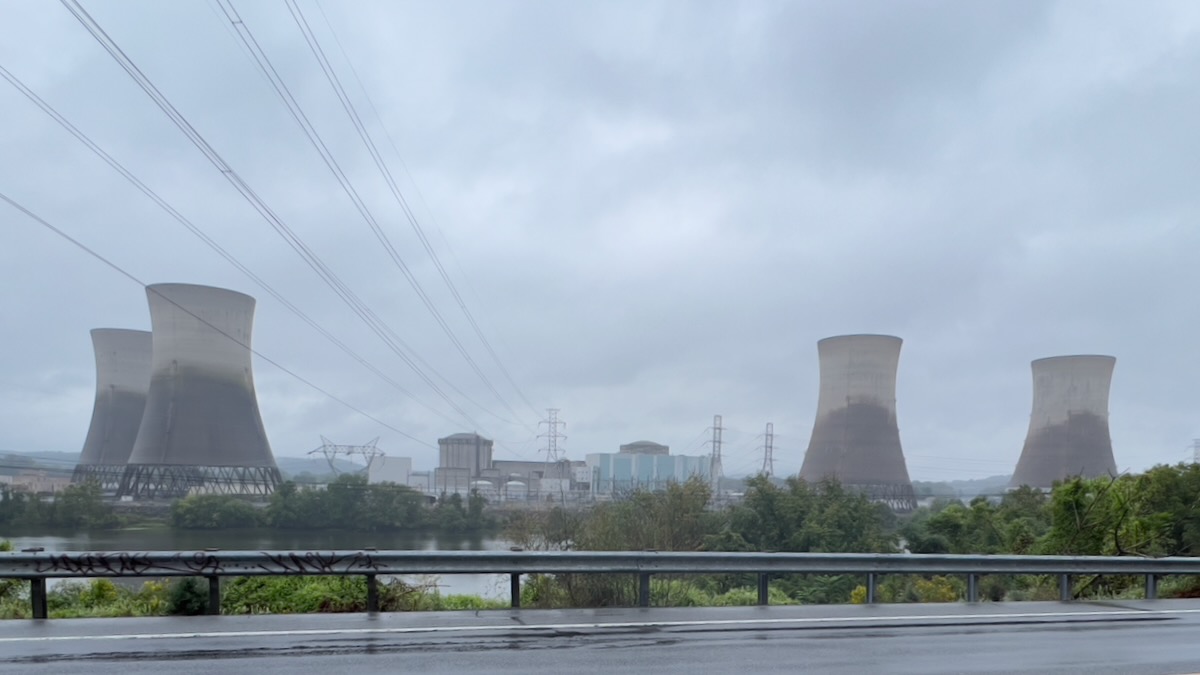
Three Mile Island

I remember flying with my professor in his private plane to the nearest NRC office in Portland Oregon to be briefed. The accident occurred in Unit 2 which has been shut down since the accident. Unit 1 remained in operation until 2019. Both are being decommissioned now – decade-long processes.

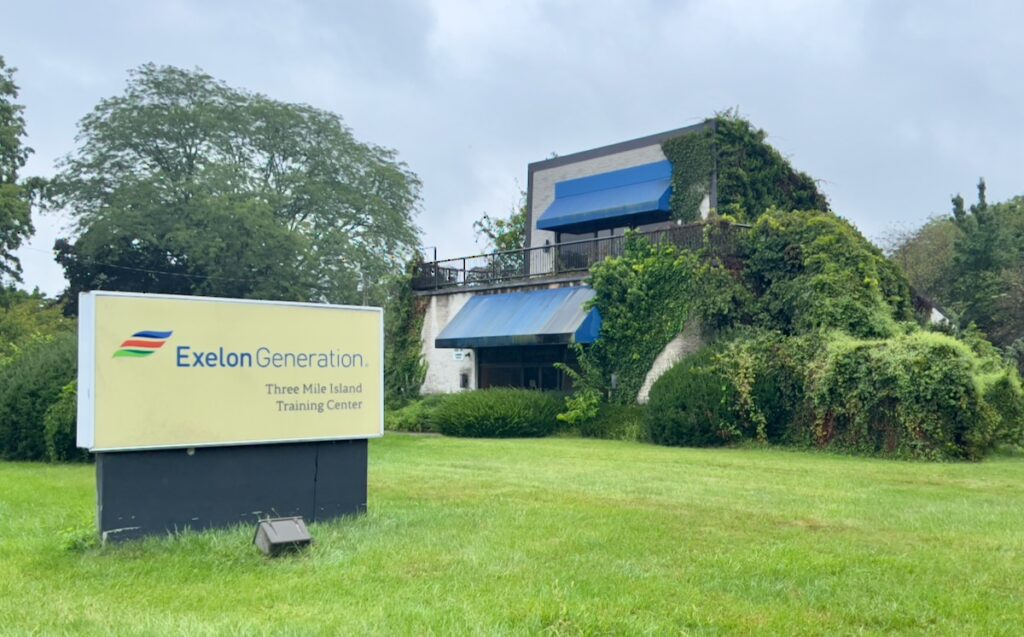
Old Training Center looks haunted!

For me, it was a short sharp shock that essentially ended my career before it started. The more I learned about the industry the less I wanted to work in the field. I think the final straw was when I heard that nuclear engineers had the highest rate of suicides of all engineering degrees (probably not true πŸ˜‰).

No Nukes!